|
|
Department for Cryobiology
of Reproduction System
|
Research Fellows: |
Cryobiological school of reproductive medicine originated in the 1980s: the Laboratory of Human Reproduction was established in 1983, and the Department of Cryobiology of the Reproductive System was established in 1984. It was headed by Prof. Valentyn Gryschenko, a prominent Ukrainian scientist, obstetrician-gynecologist, cryobiologist and cryomedicine specialist, and outstanding teacher. From 2013 to 2018, the department was headed by Dr. Eugeny Kopeika, and since 2018 by Prof. Maryna Petrushko.
|
|
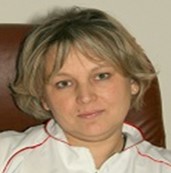
Dr. Maryna Petrushko |
SCIENTIFIC INTERESTS
- The study of the cryopreservation impact on the morphogenetic characteristics of gametes and pre-implantation human embryos and the development of effective methods of their cryopreservation. Substantiation and development of methods for in vitro maturation of human and animal oocytes and producing of preimplantation embryos for infertility treatment.
- Study of cryoresistance of sperm, oocytes and embryos of agricultural and wild animala, including various fish species. Establishing a collection of germplasm of animals, including commercially valuable and wild fish species.
RESEARCH PROJECTS
- Study of the changes in the reproductive function of animals and humans after influence of cryopreserved cellular medicines and physical and chemical factors (2.2.6.58).
- Investigation of the features of interaction and biocompatibility of nanosized particles and cultured cells (2.2.6.68).
- Investigation of geroprotective and gerotherapeutic action of cryopreserved placental bioobjects (2.2.6.89).
- Biosafety and efficiency of interaction of inert metal nanoparticles with bone marrow mesenchymal stem cells (2.2.6.95).
- Study of the influence of cryopreservation factors during vitrification on the morphological and functional characteristics of reproductive cells and embryos (2.2.6.108).
- The cryopreservation effect on placental cells and their effect on the reproductive system of females with ovarian failure (2.2.6.122).
- Substantiation of a differentiated approach to cryopreservation of reproductive cells taking into accounts their initial state and species specificity (2.2.6.128).
- Estimation of the DNA fragmentation rate of spermatogenic cells of different stages of differentiation as a mandatory component of their cryopreservation technology (2.2.6.130).
|
AWARDS AND DISTINCTIONS
- Due to the efforts of Prof. Gryshchenko, Dr. Chub (embryologist) and Dr. Piniaiev (obstetrician-gynecologist) the first "test tube baby" in Ukraine was born in 19 March, 1991.
- The first ukrainian "test tube baby" was born after successful embryo cryopreservation and transfer into the uterus in 25 August, 2003 (Dr. Petrushko, Dr. Gurina).
- Maryna Petrushko had a scholarship of the National Academy of Sciences of Ukraine for young scientists (1994); was a Young Person of the Year in the category "Scientific Activity" (1999); had the I. Mechnikov Scholarship of the Kharkiv Regional Administration of Medicine and Biology (2001).
- Taisiia Yurchuk had the scholarship of the President of Ukraine for young scientists (2018); “ was named a Young person of the year” in the nomination "Scientific activity" (2018).
- Anton Puhovkin was named a Young Man of the Year in the nomination "Scientific Activity" (2020).
|
|
|
23, Pereyaslavskaya str., Kharkiv, Ukraine 61016
Institute for Problems of Cryobiology and Cryomedicine of the National Academy of Sciences of Ukraine
Tel: +380 57 373 4143, 373 3807, 373 3039; Fax: +380 57 373 3084
E-mail: cryo.ua@gmail.com
|
|